The Federal Government has commenced the nationwide rollout of integrated rehabilitation services across Primary Health Care centres.
The reform is aimed at bringing physiotherapy, occupational therapy, speech therapy, audiology and other rehabilitation services closer to millions of Nigerians.
The initiative, launched on at the Doya Primary Health Care Centre in Bauchi State, is expected to expand access to rehabilitation for persons living with disabilities, older persons, survivors of trauma, people with non-communicable diseases and others requiring long-term functional support according to a statement by the Federal Ministry of Health and Medical Rehabilitation and Therapists Board on Wednesday.
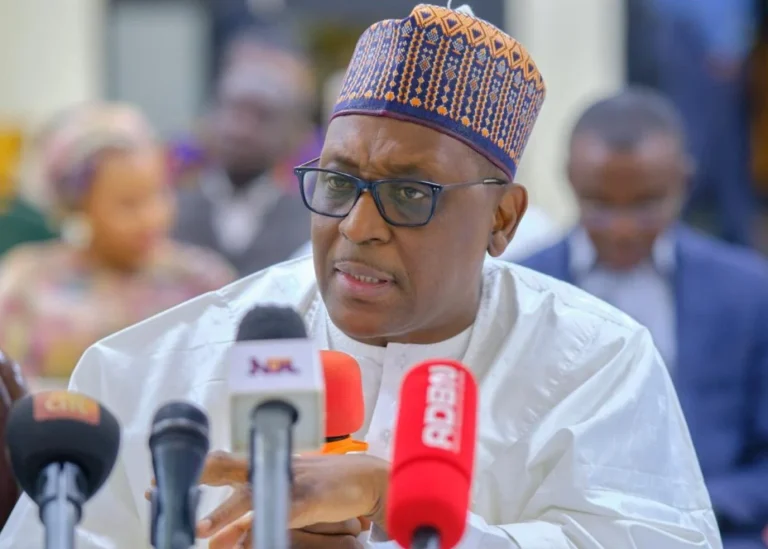
Speaking at the national launch, the Coordinating Minister of Health and Social Welfare, Prof. Muhammad Ali Pate, described the programme as a major milestone in the Federal Government’s efforts to strengthen primary healthcare and achieve Universal Health Coverage under President Bola Ahmed Tinubu’s Renewed Hope Agenda.
Pate, represented by his Special Adviser, Dr. Baba Suleiman, said integrating rehabilitation into PHCs would ensure that essential services previously concentrated in secondary and tertiary hospitals become available in communities across the country.
“Today’s launch is not the end of a process; it is the beginning of a national transformation.
“The integration of rehabilitation into Primary Health Care is not simply another programme of government; it is a strategic national investment in human capital development, Universal Health Coverage and sustainable national development,” the minister said.
Pate said the programme complements the Nigeria Health Sector Renewal Investment Initiative, through which the federal government is strengthening governance, improving health infrastructure, expanding the health workforce and delivering quality healthcare closer to the people.
He disclosed that the government had approved the implementation of the World Health Organisation’s Rehabilitation 2030 Initiative in Nigeria and inaugurated the National Rehabilitation Technical Working Group in November 2024 to coordinate implementation.
According to him, the committee has completed a National Rehabilitation Situation Assessment and is finalising the National Rehabilitation Policy, National Strategic Plan and Monitoring and Evaluation Framework to guide implementation nationwide.
The minister also announced the approval of a National Minimum Benchmark Framework that will standardise rehabilitation services and workforce requirements in PHCs across the country.
Pate, however, warned that the country faces a major shortage of rehabilitation professionals needed to drive the initiative.
He said Nigeria has about 34,000 Primary Health Care Centres but only 5,000 licensed physiotherapists, alongside shortages in other rehabilitation professions.
“Nigeria currently has approximately 34,000 Primary Health Care Centres, yet we have only about 5,000 licensed physiotherapists. This workforce is clearly insufficient to support the nationwide integration of rehabilitation services into Primary Health Care,” he said.
He urged the Medical Rehabilitation Therapists Board of Nigeria to review its regulatory framework and adopt innovative strategies that would expand training opportunities while maintaining professional standards.
The minister also revealed that the federal government is seeking additional funding to replicate the Doya rehabilitation model in PHCs nationwide.
“In addition, the Ministry is advancing the integration of rehabilitation services and rehabilitation-related assistive products into the National Health Insurance Authority framework to reduce the financial burden and out-of-pocket expenditure currently faced by Nigerians requiring rehabilitation services,” he said.
Earlier, the Registrar and Chief Executive Officer of the Medical Rehabilitation Therapists Board of Nigeria, Yusuf Ahmad, described the launch as a defining moment in the country’s healthcare system.
According to him, rehabilitation services have remained largely confined to secondary and tertiary hospitals for more than six decades, leaving many Nigerians in rural communities without access to essential care.
“Today’s launch represents the fulfilment of years of advocacy, collaboration and policy development,” Ahmad said.
He noted that the Board had already digitised its regulatory processes, reviewed professional guidelines and strengthened accreditation systems to support the expansion of rehabilitation services nationwide.
Ahmad assured the federal government that the Board would continue to provide effective regulatory leadership to ensure quality, safe and ethical rehabilitation services across the country.
He also urged physiotherapists, occupational therapists, prosthetists and orthotists, speech and language therapists, audiologists and other rehabilitation professionals to work together to ensure the success of the programme.
“No single profession can achieve this vision alone,” he said.
A major highlight of the launch was the donation of rehabilitation equipment and materials by the Foundation for Empowering Persons with Disabilities through Medical Rehabilitation.
The Foundation’s Chairman, James Lalu, also announced the sponsorship of the salary of a physiotherapist for one year to provide rehabilitation services at the Doya Primary Health Care Centre.
The event was attended by officials of the Bauchi State Government, the National Primary Health Care Development Agency, representatives of the World Health Organisation, development partners, professional associations, organisations of persons with disabilities and traditional leaders.
Residents of Doya and surrounding communities can now access physiotherapy, occupational therapy, speech therapy, audiology, prosthetics and orthotics services directly at the PHC.
The rollout of integrated rehabilitation services is part of Nigeria’s implementation of the WHO Rehabilitation 2030 Initiative, a global strategy launched to make rehabilitation an essential component of Universal Health Coverage.
The programme is also aligned with the federal government’s Nigeria Health Sector Renewal Investment Initiative, which seeks to strengthen primary healthcare, improve health outcomes and reduce inequities in access to essential services.
According to the World Health Organisation, more than 210 million people in Africa require rehabilitation services, while over 63 per cent of those in need are unable to access them, making community-based rehabilitation a critical public health priority.
