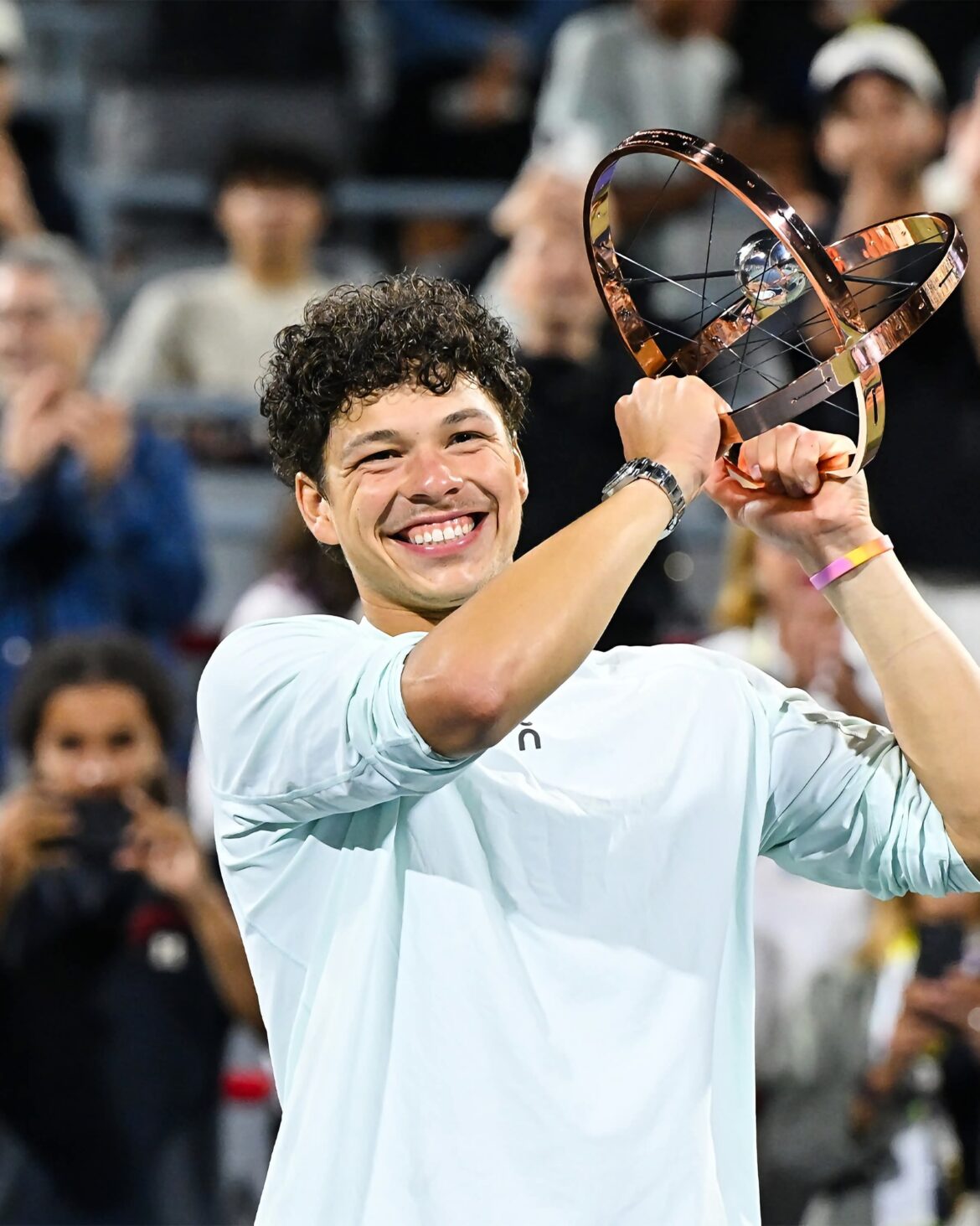
Ben Shelton beats Nakashima in Montreal ATP 1000 final with a ruthless return game
Ben Shelton beats Nakashima in Montreal ATP 1000 final with a ruthless return game
Ben Shelton beats Nakashima in Montreal ATP 1000 final with a ruthless return game
Ben Shelton brought the big-stage composure to Court Central and left with the Montreal title. The No. 5 seed defeated No. 28 seed Brandon Nakashima 6-3, 7-6(4) in a straight-sets final that rewarded cleaner second-serve work and heavier return pressure. The scoreline was tidy, but the path there was built on small edges that kept adding up. After a brisk first set and a longer, tense second set, Shelton closed the tiebreak with authority. For fans wanting the numbers behind it, Sofascore had the serve and return story live from start to finish.
Serve-first final, scoreboard second
Shelton’s serve did not blink across 10 service games, which is the first headline stat. He was never broken and did not face a single break point, finishing with 45 service points won to Nakashima’s 44. Aces were close at 7 for Shelton and 8 for Nakashima, and there were no free points from double faults on Shelton’s side compared to one for Nakashima. The raw power looked similar, yet what happened after the first ball separated the two. Shelton landed 69% of first serves to Nakashima’s 63%, giving him more looks at high-percentage starts.
Once the first ball was in, Shelton stayed on the front foot. He won 86% of first-serve points, a firm edge over Nakashima’s still-strong 80%. The bigger swing came on second serves, where Shelton captured 76% of points and Nakashima managed only 50%. That second-serve gap set the rhythm of both sets, reducing Nakashima’s chances to get a foothold in return games. With cleaner margins and no double faults, Shelton could swing freely in pressure moments.
Return pressure that shaped the result
If the serve framed the match, the return wrote the ending. Shelton won 20 receiver points to Nakashima’s 9, a decisive tilt that drove the overall 65-53 total points. Against Nakashima’s first serve, Shelton harvested 20% of return points compared to 13% the other way. The real damage came against the second delivery. Shelton claimed 50% of second-serve return points while Nakashima won only 23% on Shelton’s second serve.
That pressure translated directly into the only breaks of the day. Shelton converted 2 break points and Nakashima converted none. The first set tells the cleanest story: Nakashima served first, faced 4 break points, and saved 2 of them. The other two became the 6-3 difference. On Shelton’s delivery, Nakashima never earned a look, reflected in Shelton’s spotless 0/0 on break points saved.
Set-by-set: from sprint to squeeze
The first set moved fast and tilted blue early. Nakashima fired 5 aces in the opener and landed 67% first serves, but Shelton did more with his chances. He won 85% of his first-serve points and 71% on second serve, enough to hold all four of his service games comfortably. On return, he took 33% of first-serve return points and 55% on second serve in the set. That added up to two breaks and a 6-3 start, with Shelton’s maximum run stretching to four games in that opener.
The second set became a hold-heavy arm wrestle. Both players lifted on serve, and Nakashima actually edged first-serve points in the set 91% to Shelton’s 88%. Still, the second serve continued to lean Shelton’s way at 80% won, while Nakashima stayed at 53%. Return patterns shifted slightly too. Nakashima grabbed a few more first-serve return points in set two, but Shelton compensated by winning 46% on second-serve returns. With no breaks on either side, the tiebreak arrived and Shelton sealed it 7-4.
Clutch details and momentum swings
The scoreboard suggests a narrow finish, yet the micro-margins point to sustained control from Shelton. He posted the longest streaks in both points and games, peaking at seven points in a row and five straight games overall. Nakashima’s maximum run topped out at six points and just a single game back-to-back. Those little waves matter in finals, especially when they come around service rotation and scoreboard pressure.
Even the near-equal service points total, 45 for Shelton and 44 for Nakashima, masks where the match tilted. Shelton converted return half-chances at a higher rate and protected his own second serve better. That combination is brutal on hard court, where one loose service game can swing an entire set. In Montreal, it swung the trophy. When the tiebreak arrived, the second-serve confidence and earlier return success carried over to the final seven points.
Why Shelton’s second serve was the quiet MVP
The second serve defined the margins from the opening games. Across the match, Shelton went a perfect 17/17 on second serves put into play and won 76% of those points. That is elite control in a final and it kept Nakashima from applying any real scoreboard stress. On the flip side, Nakashima’s 50% win rate behind the second ball invited pressure in rallies and gave Shelton repeat looks to step in on return.
Add in the discipline on big points and you get a clear picture. Shelton faced zero break points across 10 service games. Nakashima survived half the four he faced in the first set, but two losses there were enough. The tiebreak underscored the theme. Shelton’s serve metrics held, his return stayed sticky on the second ball, and the 7-4 finish reflected that balance. For a final on a quick outdoor hard court, that is the blueprint.
Final word from Court Central
Shelton’s 6-3, 7-6(4) win was built on reliable first serves, a standout second serve, and superior returning. He outscored Nakashima 65-53 in total points despite Nakashima’s ace edge, which says plenty about what happened beyond the highlight reel. The break-point line was simple and decisive at 2-0. The service hold line was even cleaner at 10-10 in attempts and 10-9 in conversions, with Shelton perfect and Nakashima broken twice.
